Why a Christmas Alpaca Walk Makes the Perfect Festive Family Outing
A Christmas alpaca walk might sound like something from a children's storybook, yet here in Hampshire it has become a genuine holiday tradition. I have been taking groups out along the woodland trails of Itchen Valley Country Park for several seasons now, and I still get a kick from watching people's faces when they first meet these animals up close. There is something about the way an alpaca moves through winter air, with its soft fleece and long neck, that shifts your mood faster than any Christmas tree ever could.
People often ask me what the difference is between an alpaca and a llama. I explain that alpacas are smaller, more refined in the face, and far more interested in your coat pocket than in your opinion of them. They are also quieter than you might expect. A group of eight or ten alpacas walking a frozen path makes almost no sound, just the gentle crunch of hooves on frosted leaves. That quiet presence is part of the charm. It lets you settle into the moment without the noise of everyday life. And when you add a dusting of snow or a low winter sun through bare branches, the whole scene feels like a winter wonderland that hasn't been overproduced.
The first time I led a christmas alpaca walk, I was nervous. Not about the alpacas, they are reliably calm. I was worried that people would expect a polished, Santa-and-reindeer type show. What I learned is that most families come because they want something quieter. They want an animal encounter that does not involve crowds or ticket booths. They want to walk beside an animal that does not care about the date on the calendar. And that is exactly what they get.
What to Expect on a Guided Walk
A typical guided walk lasts about an hour, though you should allow longer if you want to visit the farm shop afterwards. You arrive, meet your handler, and get a short briefing on how to walk with an alpaca. They lead from the shoulder, not the head, and they prefer a steady pace. You do not yank or hurry them. If an alpaca decides to stop and stare at a fallen log for two minutes, you stop too. That is part of the deal. Children under ten often take to this instantly. Adults sometimes need a moment to unlearn their usual hurry.
The route through Itchen Valley Country Park follows a mix of open fields and woodland trail. You pass through stands of birch and oak, cross a small wooden bridge over a stream, and eventually circle back to the starting point. Along the way the handler points out individual alpacas by name and explains their personalities. Some are bold and will try to nibble your sleeve. Others hang back and watch. Every group has a leader, usually an older female, who decides when to move and when to graze. Watching that social structure unfold is fascinating, especially for children who have only ever seen farm animals in pens.
I have seen families book a christmas alpaca walk as a way to escape the commercial rush of December. They arrive tired from shopping lists and school events, and within ten minutes they are laughing at an alpaca that has decided to lie down in the middle of the path. There is no schedule you can enforce with a creature that weighs more than a Labrador and has its own ideas about comfort. That is the point. You let go of control and enjoy the slow, deliberate pace of an animal that lives entirely in the present.
Gift Vouchers and the Festive Experience
If you are looking for a present that does not add to the pile of plastic toys or scented candles, a gift voucher for an alpaca walk is worth considering. Alpacas Hampshire offers vouchers that cover the guided walk itself, and they can be used throughout the winter months. I have had groups where the walk was a gift from grown children to their parents, and groups where a grandparent brought the whole family as a shared festive experience. The voucher format works well because the recipient chooses the date, and the walk itself becomes the memory, not just the thing you unwrapped.
Some people combine the walk with a stop at the farm shop for mulled wine and mince pies afterwards. That is a natural pairing. You have been outside for an hour in cold air, your cheeks are flushed, and you want something warm. The shop also sells alpaca wool products, scarves and hats and gloves, which make practical additions to any Christmas shopping list. I have noticed that many visitors buy a small woolly gift for themselves as a keepsake of the day.
Who Is This For
I get asked whether a christmas alpaca walk suits very young children or older adults. The answer is yes to both, with a small caveat. Children under three might not have the patience to walk at alpaca speed for a full hour, though they enjoy the close-up meeting. Older adults with mobility issues can manage if they are comfortable on uneven ground; the trail is not steep, but it is natural terrain. The handler can adjust the pace to the group. I have led walks for a single couple and for a group of twelve. The animals do not mind either way.

One thing I would mention is that this is not a pony ride. You do not sit on the alpaca. You walk beside it on a lead. That distinction matters because some people arrive expecting a riding experience. The pleasure here is in the company, not the transport. You are sharing a walk with an animal that has a gentle curiosity about the world. If you let yourself slow down and pay attention, you notice things: the way an alpaca's ears rotate to catch sounds behind it, the soft hum they make when they are content, the surprising warmth of their fleece when you brush against it on a narrow path.
Why It Works as a Holiday Tradition
Every family develops its own holiday traditions. Some are inherited, like the same Christmas tree decorations every year. Others are chosen deliberately. A winter walk with alpacas has the right ingredients to become one of those chosen traditions. It is active without being strenuous. It involves animals without being a petting zoo. It takes place outdoors, which in December feels like a small act of defiance against the hours spent indoors. And it produces photographs that people actually want to look at later, not just scroll past.
I have seen groups return year after year. The children grow taller, the alpacas get new haircuts, but the basic shape of the experience stays the same. You meet at the park, you get your animal assignment, you walk the same trail. The repetition is part of the comfort. It is like visiting the same farm shop every Christmas for the same mulled wine. You know what is coming and you look forward to it anyway.
If you are still deciding whether to book, I would say this: do not overthink the weather. A bit of drizzle or cold does not bother the alpacas. They have thick fleece and they prefer cool temperatures. The only time a walk gets cancelled is if the ground is dangerously icy or the wind is strong enough to make the trail unsafe. Most December days in Hampshire are perfectly fine. Dress in boots and a warm coat, bring a hat, and you will be comfortable.
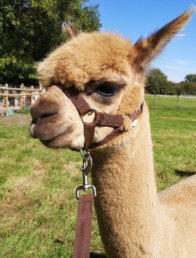
The real magic of a winter walk with alpacas is not in any single moment. It is in the cumulative effect of stepping away from the rush, spending time with a calm animal, and sharing that with people you care about. That is why I think it works as a holiday tradition. It does not try to be spectacular. It simply offers a space where you can be present, outdoors, and a little bit slower than usual. And in December, that is a gift worth giving.